Categories
Uncategorized

Vetenskapen måste sträcka fram handen först för att polariseringen mellan religion och vetenskap skall kunna brytas

Vetenskapen måste sträcka fram handen först för att polariseringen mellan religion och vetenskap skall kunna brytas

Johan Gamper

Psykolog och filosof

”Gud finns.” ”Gud finns inte.” ”Jag tror på något som är större än mig.” ”Jag tror inte på något som är större än mig.” Det är lätt att tappa bort sig. Bäst att lämna frågan till specialisterna. Var och en får bli salig på sin fason. Eller? Hur går det med detta? Sekularisering i all ära men märker vi inte av ett sug efter religion? Jag skriver medvetet ”religion” och inte ”andlighet”. Det här är mycket svårt. Får man vara ”andlig” utan att vara ”religiös”? Den här artikeln handlar om ”religiositet”.

Jag har sedan 1900-talet fiskat i helt andra vatten men frågan om Guds existens är nu på bordet och när jag lyfter blicken och ser mig omkring märker jag att den är brännhet. Jag ser en polarisering som jag lämnar åt idéhistorikerna att bena ut. För oss andra räcker det med att sätta ord på vad vi dagligen ser och hör; vetenskapen står mot religionen. Polerna har andra benämningar i debatterna men bortom det politiska har vi detta.

Inte förrän idag har jag förstått hur viktigt det här är. Viktigt för vår arts överlevnad.

Jag vill därför pausa dagsläget och ge ett alternativ till polariseringen.

Redan de gamla grekerna ansåg att allt består av en slags substans. Den aktuella versionen är att allt sist slutligen består av fysisk energi. Därför kan det inte finnas en icke-fysiskt Gud (och allt substantiellt ”andligt” består av fysisk energi).

Det räcker med att lägga till ett enda ord för att rasera detta bygge och släppa in lite luft. Tilltaget bryter mot allt det vett och all den sans som vi vilat mot i tusentals år. Men vi behöver luft och vi behöver kunna tro på både Gud och vetenskap.

Ordet är ”minst”: allt består av minst en slags substans. Jag har skrivit om det här på andra ställen och mycket kort ger tillägget möjligheten att det kan finnas både annat än det som är fysiskt och, än viktigare, att det kan finnas det som binder ihop de olika delarna.

Ett spännande exempel är hur man kan förklara singulariteter inuti svarta hål. De har ju oändlig massa vilket är svårt för fysiken att hantera. Om de vore matematiska skulle det inte vara något problem men de har ju massa och är därför inte matematiska. Kanske är de både och? Tillägget tillåter ju det.

Vårt medvetande då? Kanske är det både biologiskt och icke-biologiskt/subjektivt erfarande?

Till dagens polarisering. Om det kan finnas det som har (minst) dubbla existenser (bestå av (minst) två ontologiska slag), vad har det med Gud att göra? Nu blir det lite knepigt men vi har ju att göra med det svåraste av allt, så vad är att vänta. Vi låter bara Gud vara Intet och icke-Intet. Detta är som sagt bortom allt vett och all sans men är innanför det tillägg vi har att göra med.

Med tillägget behöver vi inte välja mellan religion och vetenskap. Vi kan äta upp kakan men ändå ha den kvar. Hur den nu än må smaka. Religion (eller rättare sagt, teologi) och vetenskap kan på detta sätt ha ett identiskt fundament. Vem ska böja sig först då? Den starke. Vetenskapen skulle behöva ta till sig tillägget och se dess möjligheter.

Johan Gampers artikel Formal Theology finns tillgänglig på pre-printservern qeios.com.

Categories
Uncategorized

Dagens psykiatri befinner sig i ett etiskt sönderfall

Dagens psykiatri befinner sig i ett etiskt sönderfall

Jag är sextio år och det kan tyckas att sextiotalisten varnar för ungdomens förfall men jag ska tala för min sak utifrån ett fallexempel och några artiklar.

Jag började arbeta som psykolog på Brandbergens vårdcentral i Haninge söder om Stockholm 2003. Det första decenniet arbetade jag ensam så det blev en vana att ta emot så många studenter som möjligt. Nu är vi många psykologer och traditionen lever vidare.

Det senaste decenniet har jag själv varit patient. Jag har hjärncancer och har gjort fyra operationer. Efter de två första kom jag tillbaka genom arbetsrehabilitering. Jag hade fördjupat mig i mindfulness och kunde arbeta upp kapacitet med detta. Den fjärde operationen gjorde jag under pågående heltidssjukskrivning efter den tredje operationen. Den långsamtväxande cancerformen hade övergått till att bli snabbväxande.

Jag tog mig dock tillbaka och har jobbat i ett år. Dock utan att få patienter för mindfulness. Parallellt har kollegorna planerat för en stresskola. I juni fick jag reda på att jag skulle kalla alla som visat intresse för stresskolan till mindfulnessgrupp efter semestern. Jag skulle också ta hälften av alla nybesök vuxna.

Jag blev naturligtvis paff men den krassa förklaringen är att subjektet (i det här fallet mitt subjekt) inte är med som parameter.

Jag kraschade tungt direkt efter semestern. Svårigheterna med att involvera subjektet inom vården är dock större än vad detta fallexempel kan visa.

”Att veta är att mäta”, är det som gäller. Om man inte kan mäta subjektet finns det inte. Filosofin har brottats med detta sedan de gamla grekerna. Nu tar man för givet att allt är mätbart. För att klara den spärren har jag behövt bryta ny filosofisk mark (2017). För att begreppsliga relationen mellan det biologiska objektet och det upplevande subjektet behövde jag sedan definiera en icke-kemisk biologisk energi (2021). Slutligen, för att få in det upplevande subjektet som en klinisk parameter, behövde jag skapa en ny psykologi, makropsykologi (2024).

Nu finns det en väg att följa för att återinföra det upplevande subjektet.

För att kunna arbeta etisk i förhållande till det upplevande subjektet behöver det erkännas. Nu är det möjligt.

Det etiska sönderfallet inom psykiatrin är en följd av tidsandan. Det upplevande subjektet erkänns inte eftersom det inte går att mäta. Det etiska förhållningssättet till det upplevande subjektet har därför imploderat. Lösningen till detta omänskliga förhållande är att följa min väg. Kunskap är kanske makt men just nu är det framförallt ansvar. Vi kan förhålla oss etiskt till det upplevande subjektet. Följ bara min väg.

Referenser

Gamper, J. (2017). On a Loophole in Causal Closure. Philosophia 45, 631–636https://doi.org/10.1007/s11406-016-9791-y

Gamper, J. (2021). Biological Energy and the Experiencing Subject. Axiomathes 31, 497–506. https://doi.org/10.1007/s10516-020-09494-8

Gamper, J. (2024). Marco psychology.

Categories
Uncategorized

On a Loophole in Causal Closure

Gamper, J. On a Loophole in Causal Closure.Philosophia 45, 631–636 (2017). https://doi.org/10.1007/s11406-016-9791-y

Abstract

Standard definitions of causal closure focus on where the causes in question are. In this paper, the focus is changed to where they are not. Causal closure is linked to the principle that no cause of another universe causes an event in a particular universe. This view permits the one universe to be affected by the other via an interface. An interface between universes can be seen as a domain that violates the suggested account of causal closure, suggesting a view in which universes are causally closed whereas interfaces are not. On this basis, universes are not affected by other universes directly but rather indirectly.

Categories
Uncategorized

Biological Energy and the Experiencing Subject

Gamper, J. Biological Energy and the Experiencing Subject. Axiomathes31, 497–506 (2021). https://doi.org/10.1007/s10516-020-09494-8

Abstract

As physical things have mathematical properties we in this paper let mental things have biological properties. The work is based on recent metaphysical findings that shows that there could be interfaces between separate ontological domains. According to this view there could be mathematical objects, physical objects, and also mental objects. The aim of this study is to establish a view of the biological object that allows it to possibly generate the experiencing subject. Based on the notion that energy per se is related to the ability of a system to do some work, biological energy is defined as a biological object’s ability to recover from the load it is exposed to. Introducing the concept of the experiencing subject, the experiencing subject would be the agent experiencing the biological object’s need of recovery from the load it is exposed to. Once established, the experiencing subject may develop non-biological needs. On this basis experiencing subjects have biological properties without being biological in exactly the same manner as physical things have mathematical properties without being mathematical (would that be the case).

Categories
Uncategorized

Formal Theology

Johan Gamper. (2023). Formal Theology. Qeios. doi:10.32388/EMANIB.

Categories
Uncategorized

Interstellar Variations 1: Plan B and Causal Objects

Johan Gamper

Michael Cain’s character Professor John Brand in the movie Interstellar has a Plan A for the survival of mankind. If that doesn’t work he has a backup Plan B. Plan A is the wanted one whereas Plan B saves some astronauts and a lot of fertilized eggs.

Today we have a scientific culture that functions as our Plan A. That culture states that everything in one way or the other is physical. A recent shift in our language is the move from “my thoughts are in my mind” to “my thoughts are in my brain”. If we have thoughts and everything in the end is physical it is natural to think that one’s thoughts are in one’s brain.

In preparation for the defense of my master thesis in theoretical philosophy at Stockholm University, Sweden (2019 [revised version adapted for peer review], 2024 [original manuscript with an updated title, originally it was entitled “Causal Composition”]) I played with an application of it and found that it provided an ontologically neutral view of the scientific object. I had introduced the concept of causal objects and it applied for any kind of object (with a causal background). In my preparation I saw that separate ontological fields could be joined by something I called interfaces (2017 [the preparation never came to be used since the defense seminar was canceled]). Accordingly, everything in the end may be physical – or not. I thought this eventuality was very interesting.

Plan B is to investigate this possibility and see where it may lead. One thing is established, though, and that is that the mind can be a substance of its own ― provided that there can be interfaces between ontological domains.

Variation 1

Descartes’ extended objects are not just extended. They are, just like all other ordinary objects, also continuous objects. Take a football for instance. It rolls over the football field when you kick it. It rolls and is itself as it rolls. Just like people going about doing their things being themselves as they go about. Any causes affecting such a continuous object affect the continuous object. It is like the famous example with billiards balls. The balls go there and there after the break – as continuous objects.

When we look at quantum sized objects we have the same basic understanding of them. They move about as continuous objects and are extended. The dualistic view of the mind, however, is that the mind is something totally different. For one thing, it has no physical extension. And, of course, this disqualifies it from the list of possible objects.

When we move with plan A, therefore, we think that all things are continuous and that they belong to a specific set of dimensions, the physical dimensions. In a variation of this theme we must change something. We have three things to look at: the dimensionality, the continuity, and the extension of the object.

We can start with the extension of the object. Physical objects have extension. They have physical extension. If we in this variation assume non-physical objects to be without extension we are back in the Princess Elisabeth-Descartes dilemma. So let us say that all objects have extension. Given this, that all objects have extension, we can add the assumption that all objects are in some set of dimensions. They have some sort of dimensionality.

Now we have continuity left to consider. Without attacking footballs or creatures moving about let us just take a deep breath and pause with continuity for a while.

In the preparation to defend my master thesis I saw that separate ontological fields could be joined by interfaces ― provided that all objects were causal objects. Essentially this is the variation since causal objects are discrete objects.

References

Gamper, J. (2017). On a Loophole in Causal Closure. Philosophia 45, 631–636.

Gamper, J. (2019). Blocking the Vagueness Block – A New Restricted Answer to the Special Composition Question. Philosophia 47, 425–428. Full text via ResearchGate.

Gamper, J. (2024). Causal Principles in Material Constitution: A Philosophical Inquiry into the Composition of Objects. Qeios. doi:10.32388/H2B7NA.2.

Categories
Uncategorized

Socrates’ Diocese — a Dialogue about the Existence in the Non Existence

Abstract

This dialogue turns into a discussion between three people. The interlocutors are Socrates, Jeito and finally also Plato. The dimensions of Time, Space and Person are occasionally transgressed. The conclusion is that information seems to be unidirectional concerning life and death.

Jeito. I have been waiting a long time to meet you. Finally. How are you?

Socrates. I don’t know. Should I?

Jeito. Sorry. You hear me. Do you see me?

Socrates. I don’t think so. Who are you?

Jeito. Sorry. I’m Jeito. You’re Socrates.

Socrates. Yes. But could you please answer my question?

Jeito. I’m searching for wisdom. I have been learning about myself for over thirty years.

Socrates. That’s good. What have you learned?

Jeito. That it’s worse than I thought. And better.

Socrates. I like that. How can you be alive? Don’t they kill you for wisdom where you come from?

Jeito. …

Socrates. Okay. What more?

Jeito. Now it’s your turn. Please.

Socrates. I love my wife. She’s dead now. You cannot satisfy the gods. What more? You can discuss after death. Obviously. Friendship is important. You can see further than you think. What more? Knowledge starts with knowing yourself. Plato didn’t believe me. I don’t know. Can you continue?

Jeito. We’re all one.

Socrates. You learned that from inspection?

Jeito. No. I was told that.

Socrates. Thought so. What else?

Jeito. No man is an island.

Socrates. Come on now!

Jeito. I project my own shit on others.

Socrates. That’s better. More?

Jeito. I’m angry as hell.

Socrates. More?

Jeito. What do you care?

Socrates. Fair point. But tell me.

Jeito. I’m here talking to you. That’s a miracle!

Socrates. Really? It’s just how things are. You see it yourself. Through yourself. By looking at yourself. The question is what we learn from it. The learning is the miracle. Have you learned anything?

Jeito. That we are allowed to learn?

That’s a fact. What do you learn from it?

Jeito. We are free?

Socrates. That is also a fact. What do you learn from it?

Jeito. I get a bit scared.

Socrates. That’s a fact. What do you learn from it?

Jeito. That freedom is scary. You have said that, haven’t you?

Socrates. I can’t remember everything I’ve said. What are you doing here?

Jeito. I don’t remember.

Socrates. I think you just now used your freedom. Was it scary?

Jeito. No. Can I ask you something else?

Socrates. By all means. Welcome to ask whatever you want.

Jeito. Okay. Thanks. Do you think you can find all knowledge inside yourself?

Socrates. Why not?

Jeito. Can I find all knowledge inside myself?

Socrates. That’s the same question.

Jeito. All men can find all knowledge inside themselves?

Socrates. All humans can do it. Given reasonable circumstances. Do you disagree?

Jeito. No. I think I understand your point. Is there a certain age we are talking about?

Socrates. You make me laugh. I’m actually angry. Really nice feeling. Please, ask something.

Jeito. Are we in God now?

Socrates. Who?

Jeito. Are we in God now?

Socrates. Which one?

Jeito. There are more than one God?

Socrates. Are there any?

Jeito. Where are we, do you think?

Socrates. How do you define any God?

Jeito. Fair question. Can you help me?

Socrates. We’re all alone. Won’t you say?

Jeito. So. We all have the same God or there is no God?

Socrates. Is there a God?

Jeito. Can we ask someone else?

Socrates. We could try. I don’t know how, though.

Jeito. Hello! Is there anybody out there? Hello! Is there anybody in here?

Plato. You threw away all my books!

Jeito. I did. I needed to.

Socrates. Hey there, my old friend. How are you?

Plato. Am I invited? To what? By whom? What is this? How do I know that that man had thrown away my books? I’m fine, thanks? How are you?

Socrates. It’s all a blur. We where trying to clear these things out when you answered our prayers. We need help. I’ll try to find a suitable question. …. What do you experience, Plato?

Plato. Friendship.

Socrates. Jeito?

Jeito. Anxiety.

Socrates. Okay. I experience a feeling of responsibility. So. What do we learn from this? …. What do we know considering this? Anything?

Jeito. We are somewhere. We have contact.

Socrates. What is contact?

Plato. Our words matters. They are meaningful. We affect one another.

Socrates. What do we learn from that?

Plato. We are not the same. We’re individuals.

Jeito. We’re subjects?

Plato. Yes. We’re different but connected.

Socrates. So. We have learned that our experiences tell us that we are separate and connected. And that we are somewhere. And the specific experiences are feelings of anxiety, friendship and responsibility?

Jeito. Yes.

Plato. Yes. So. Where are we? And why? How did we come here?

Socrates. Is it okay that I take the lead here? I’m still feeling responsible.

Plato. Please.

Jeito. Yes. That’s fine with me.

Socrates. Plato. Do you see anything?

Plato. Can’t say I do. I have images. But I cannot say I see anything. Hard to explain.

Socrates. Yes. Let’s carry on. …. What does it matter where, why, how? Anyone?

Plato. Yes. Would it change anything? Probably not. It is how it is. What is this language, by the way?

Jeito. It’s some kind of language but we don’t talk it. We communicate in some way but not as in “talking” talking. Do we even have mouths? Or ears? Or hands? For me the language is English. What about you, Socrates?

Socrates. It’s a blur. But the actual language. Is it even me talking. I don’t know. How is it for you, Plato?

Plato. I suddenly remember things. The clothing people had. Smells. Fresh air coming in from the sea. Grapes. Walks. My hand gesturing. I do communicate these things now. But how, I don’t know. I don’t think I like these questions. But I like you two. We’re almost a crowd. Aren’t we?

Socrates. If we go. Where do we go? If I go. Where do I go? Can I go? Anywhere? It doesn’t feel like it. How free am I? How free are we? It’s like exploring a cave that you cannot escape?

Plato. Responsibility? Someone? Where is the “panic button”? I’d like that sea breeze.

Jeito. ….

Plato. ….

Socrates. …. I’m not so sure now. Give me a minute. …. Everyone is gone?

Plato. Excuse me?

Socrates. Okay. That was funny. On me. …. We are here. Some others may be somewhere else. …. I’m thinking of gods. Are we back where it all started? Will it start all over again? … I seem to have difficulties finding the right question or the right questions.

Jeito. Okay. Could we try shifting focus? A difference between you two and me is that I haven’t, to my knowledge, died yet. Perhaps this is the chance to tell the people something about the afterlife?

Plato. Nice try! Haven’t we concluded that we don’t know shit? What’s to tell? That you met two dead guys that couldn’t tell you nothing.

Socrates. Give me a moment! Okay? …. Perhaps you are not dead but what guarantees that you will be able to go back? Your life isn’t here? Am I right?

Jeito. Busted! Kidding. I hear my cat doing her thing behind me. I’m alive. But then again I don’t know about the afterlife. It’s up to you guys.

Socrates. Do I remember anything about it? How could I? Sorry. When you’re dead you are dead. I don’t know about this state.

Plato. Agree. But Jeito, surely you are almost dead? Otherwise, how could we have this nice talk?

Socrates. Isn’t it either or? Jeito cannot be both. And we cannot go back?

Plato. I would say that he is dead. He’s exactly like us. Or?

Socrates. Who could tell?

Jeito. Let’s spin this around. I’ll go back to the cat and check whether I still can have connection with you two. Are you with me?

Socrates. Whatever.

Plato. I know you are after me. Don’t try to trick me! I’ll haunt you.

Jeito. See you soon.

…

Socrates. What have you learned?

Plato. Thank you.

Jeito. I think, that we are all the same but different.
Categories
Uncategorized

Blocking the Vagueness Block – A New Restricted Answer to the Special Composition Question | SpringerLink

The vagueness objection seems to block any moderate answer to the Special Composition Question leaving us with the two extreme alternatives.

link.springer.com/article/10.1007/s11406-018-9980-y

Categories
Uncategorized

Samuel — a dialogue about incompleteness

Abstract

Samuel seeks out Kurt at a pub and initiates a discussion. Soon Kurt becomes engaged. What is it that is incomplete?

Johan Gamper. (2023). Samuel — a dialogue about incompleteness. Qeios. doi:10.32388/GJCSL5.2.

Categories
Uncategorized

Macro Psychology and the Foundation of Psychotherapy [Preprint]

Johan Gamper

Abstract

This work builds upon the paper Biological Energy and the Experiencing Subject (Gamper, J, Axiomathes, 2020). The focus is to show how the idea of an experiencing subject can be conceived of within modern psychotherapy. We follow the track from conditioning for animals (without concern for an experiencing subject), via behavioral therapy for humans with an experiencing subject and cognitive behavioral therapy for humans with an experiencing subject where we give the subject a rational for the behavioral modification, to psychodynamically oriented therapy where we confront the very subject without going via her behavior. The three methods are explained within the context of macro psychology, a psychology extracted from the paper Biological Energy and the Experiencing Subject. Conditioning concerns therapeutic methods that does not address subjective experiences of the patient and neither address subjective experiences methodologically. For instance, you do not give the patient instructions since you do not rely on the patients ability to understand them. Behavioral therapy concerns methods that that are mediated by instructions. The patient is told to follow a procedure. Cognitive behavioral therapy adds explanations to the behavioral therapy. Psychodynamically oriented therapy concerns the subject’s tendency to repress difficult inner material to feel better. This material is focused in the therapy and the patient is informed about how the therapist understands the dynamic. The framework, thus, that is presented, encompasses the major psychotherapeutic methods of today.


1. Introduction

The paper Biological Energy and the Experiencing Subject (Gamper, 2020) contains a definition of biological energy that permits a purely mental energy that should be accounted for in its own right. Here we will look at some fundamental psychotherapeutic principles that can be drawn from that standpoint.

2. Macro psychology

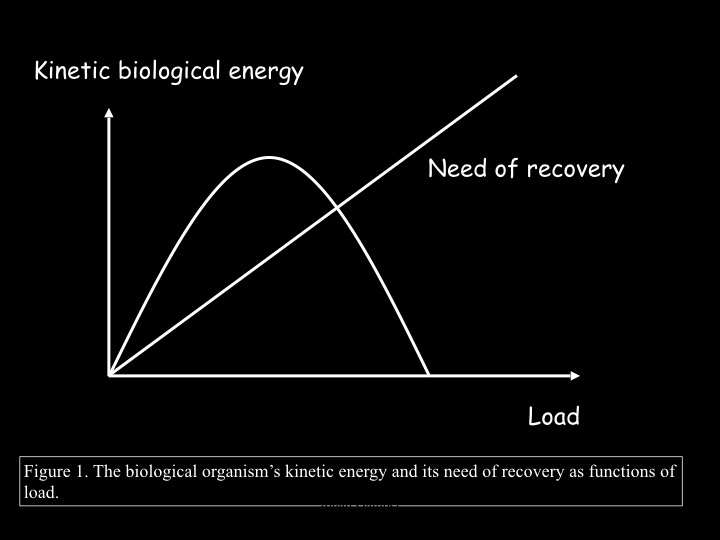
Macro psychology is built upon the notion of biological energy as suggested in Gamper (2020). Biological energy is construed as the organisms ability to recover from the load it is exposed to. That load entails a need of recovery that grows with the load. The available energy has a maximum and when that is reached as far as the ongoing recovery is concerned, the available amount of energy is decreased if the load continues to grow. This is illustrated in figure 1.

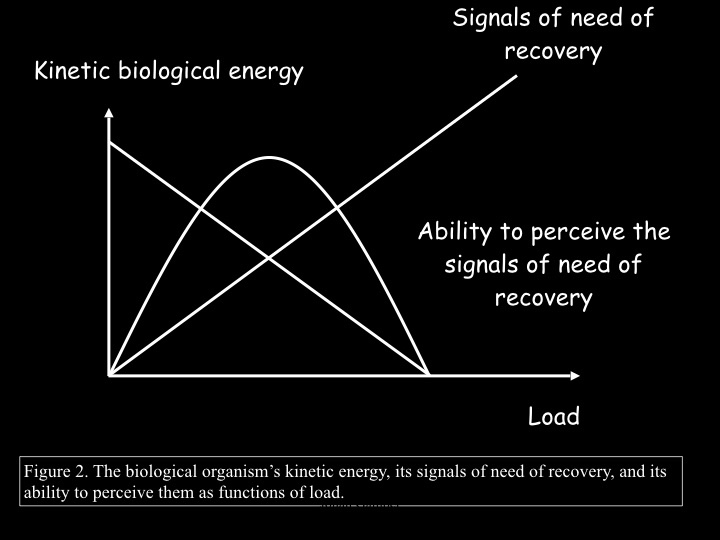
For experiencing subjects it is conjectured that the need of recovery on the one hand is mediated by signals thereof, and on the other hand that the subject has a lower ability to perceive those very signals, the stronger they are, as illustrated in figure 2.

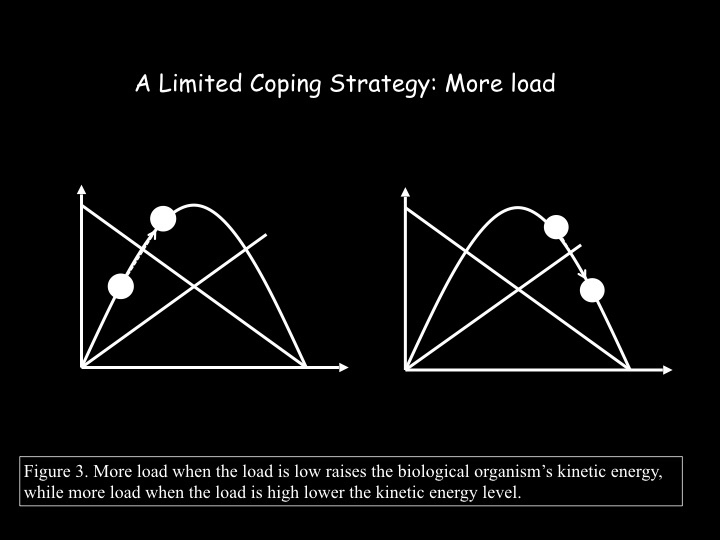
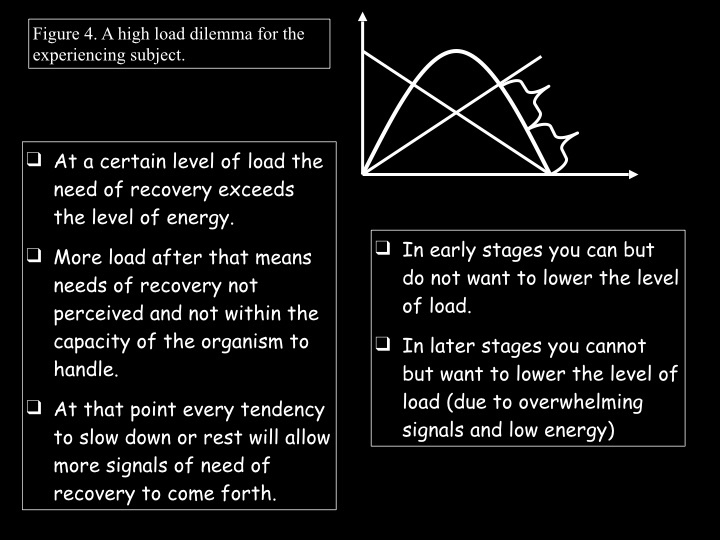
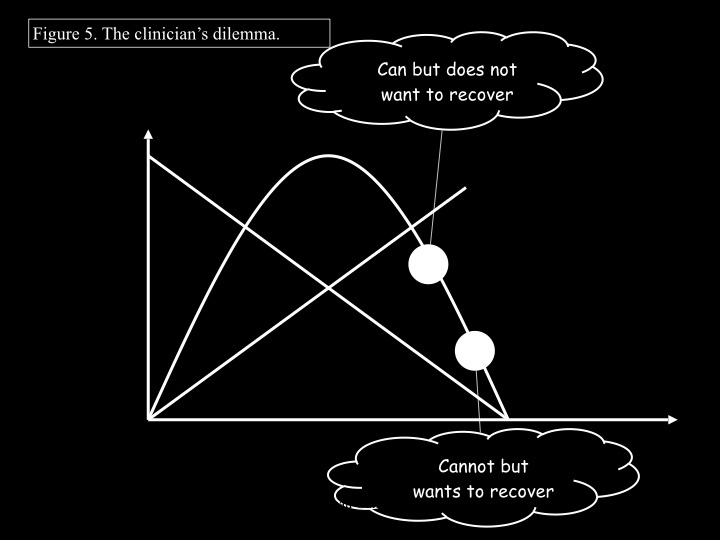
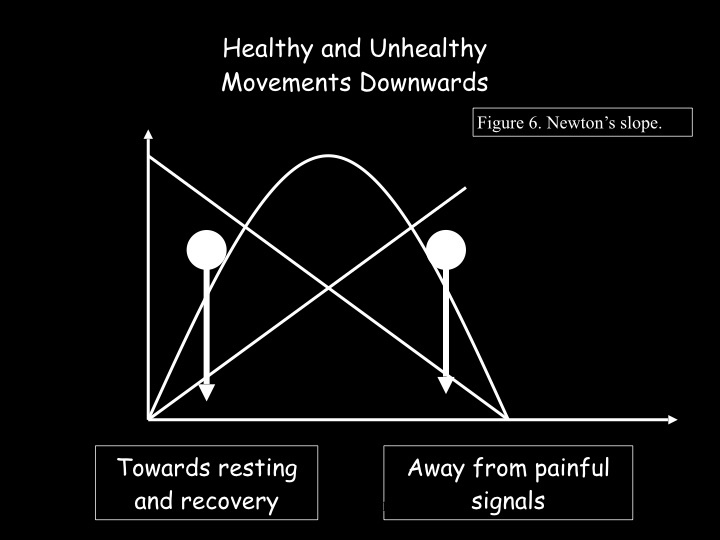
This dynamic for experiencing subjects has the odd consequence that even though the energy level lowers when load is increasing at high levels of load (compare figure 3) the subject tends to put pressure on herself to avoid the troublesome signals of need of recovery in order not to perceive them (compare figures 4-6).

3. The experiencing subject

The introduction of the experiencing subject allows for new possibilities for the organism to cope with load. We need to disentangle first, though, the biological object from the experiencing subject. For the biological object as such there is no dynamic to talk of. The object recovers if it needs to and can. When the organism is exposed to signals of need of recovery there is an experiencing subject that perceives them. Whereas the need of recovery is an abstract feature of organisms the signals of need of recovery are a reality for the experiencing subject. As depicted in figure 4 the signals can be attended to as they are perceived. This means that the biological needs of recovery are met via the experiencing subject. This, of course by assumption, is to say that the biological very needs of recovery are not perceived directly. The dynamic, however, is one dimensional — the organism recovers more or less.

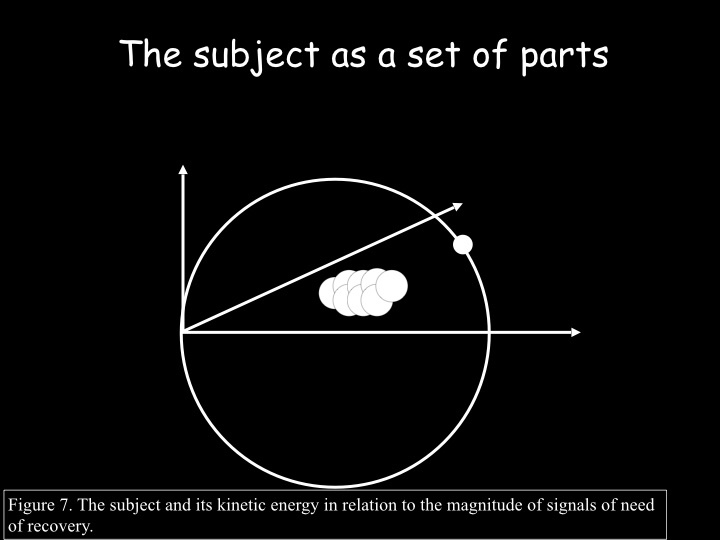
The experiencing subject, on its side, can cope with its signals in other ways. To look at those possibilities we first have to focus on the the very subject. For the biological object the need of recovery is an abstract feature. The subject on the other hand has real signals of need of recovery so it is something that has the experiences of the signals. This something, the subject, has its parts. We will assume that the subject is composed of some parts as illustrated in figure 7.

3.1. Repression

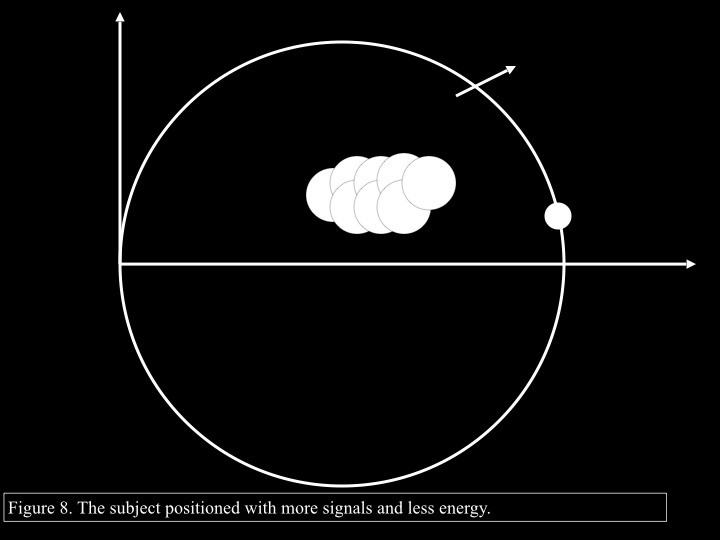
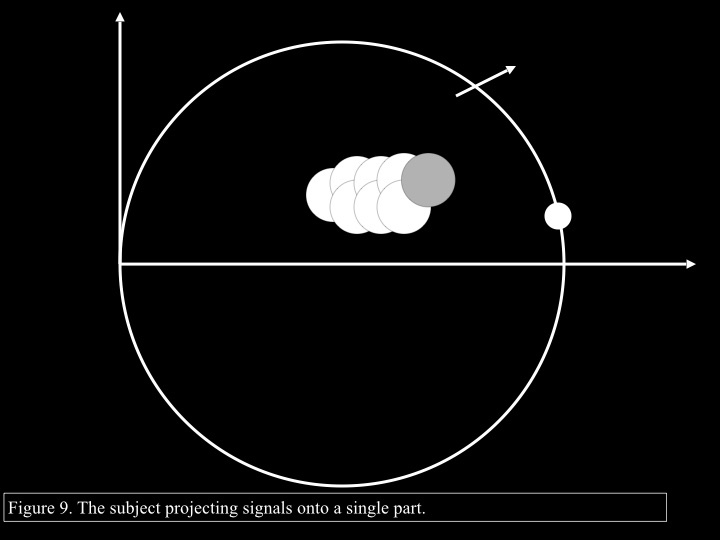
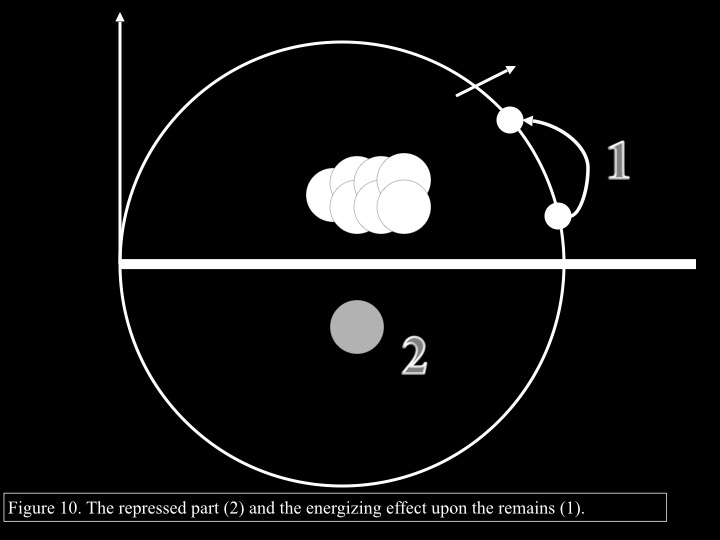
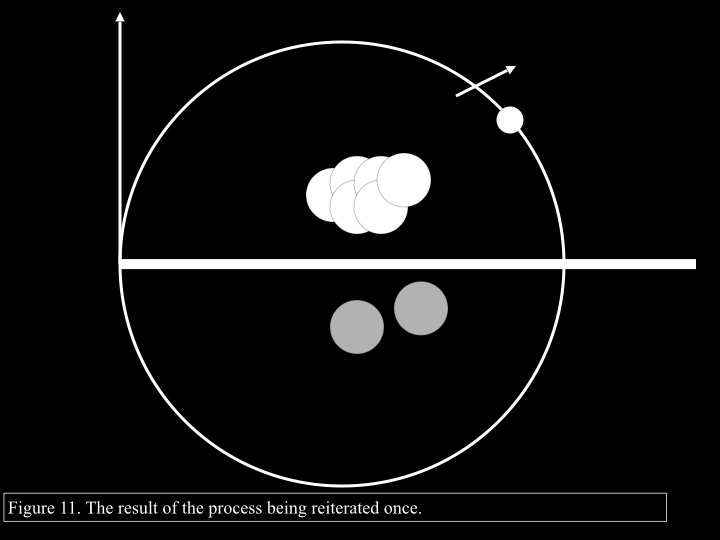
The disentangling now comes to work. Whereas the biological object has need of recovery as an abstract but absolute feature the experiencing subject has its signals of need of recovery as real but with degrees of freedom to engage with them. The suggestion here is that the subject can project troublesome signals onto a single part and then repress it. This leaves the repressed part emptied of energy while the remaining parts are energized. This process can be reiterated (compare figures 8-12).

4. Psychotherapeutic principles

The psychotherapeutic processes that are interesting are the reversed ones as compared to the ones previously mentioned. Those were concerned with avoiding difficult signals of need of recovery. Whereas conditioning concerned non subjective features of the biological organism behavioral therapy (BT), cognitive behavioral therapy (CBT), and psychodynamically oriented therapy (PDT) concerns processes related to the experiencing subject.

4.1 BT

The psychotherapeutic principle of BT in the context of macro psychology is that the therapist instructs the patient to take explicit recovery measures. The patient by following the instructions recovers and by doing so has to endure the previously withheld difficult signals of need of recovery. A typical example is behavioral activation for depression where the therapist may instruct the patient to take daily walks.

4.2 CBT

The psychotherapeutic principle of CBT in the context of macro psychology is that the therapist instructs the patient to take explicit recovery measures and explains why (according to some model). In the CBT variant of macro psychology the rational would be that the patient avoids recovery to avoid the signals of need of recovery. Therefore she should try to recover even though it hurts in order to gain energy. A typical example is to accept sick leave in cases of exhaustion.

4.3 PDT

The psychotherapeutic principle of PDT in the context of macro psychology is that the therapist tries to emphasize with the patient in order to identify aspects of the patient that she has repressed. If the patient can acknowledge repressed contents she is instructed to try to endure the associated difficult signals of need of recovery that comes with it in order to regain access to her own repressed parts.

5. Applications

Scenarios with a maltreated dog, its owner, and a therapist.

Conditioning

The therapist takes the dog to a safe environment.

Behavioral therapy

The therapist instructs the owner to take regular long walks with the dog, to feed it regularly, to let it have access to fresh water and to stop hitting it.

Cognitive behavioral therapy

The therapist instructs the owner to take regular long walks with the dog, to feed it regularly, to let it have access to fresh water and to stop hitting it. The therapist also tells the owner why.

Psychodynamically oriented therapy

The therapist tries to help the owner to reconnect to repressed parts that cares for the dog.

6. Reference: Gamper J (2020) Biological energy and the experiencing subject. Axiomathes.