Categories
Uncategorized

On a Loophole in Quantum Gravity

Johan Gamper. (2024). On a Loophole in Quantum Gravity. Qeios. doi:10.32388/RM0TK5.4.

Abstract

I show that general relativity and quantum mechanics, broadly construed, are consistent in relation to the singularities inside of black holes, if the singularities inside of black holes are interfaces.

1. Introduction

Say that if the singularities inside of black holes have no extension in space-time they cannot be accounted for by quantum mechanics if quantum mechanics only is meaningful for events at least of the Planck length. Also, say that this would imply that general relativity is inconsistent with quantum mechanics. I will show that this inconsistency is dependent upon a premise that can be questioned.

2. Loophole causal closure

Loophole causal closure (Gamper, 2017) predicts that the physical universe is preceded by an earlier one (that can be mathematical). This is made possible by a redefinition of the principle of causal closure. The redefinition makes interfaces between universes consistent with the principle of causal closure, which is why it is ontologically meaningful to consider the possibility of a multiverse.

3. Loophole Quantum Gravity

The premise referred to in the Introduction is that the singularity inside  of a black hole is situated in the physical universe. If there is only one universe and that universe is physical, of course, the singularity inside of a black hole is in the physical universe. If we consider, however, that there might be more than one universe and that loophole causal closure is true, we admit that there can be interfaces. According to this view, black hole singularities can be viewed as interfaces.

This scenario can be unpacked as follows. Let us define the black hole predicament as the situation where the singularity inside of the black hole is mathematical in its nature. Then we cannot explain how it has the non-mathematical, physical property of having mass. At the same time, it has mass, which is why it cannot be purely mathematical.

One solution is to view the black hole singularity as an interface between the physical universe and the mathematical universe. According to this view, the black hole singularity has a dual existence, it is both physical and mathematical.

4. Comment

I have written about this possibility elsewhere. See, for instance, (2023).

References

Categories
Uncategorized

Causal Principles in Material Constitution: A Philosophical Inquiry into the Composition of Objects

This is my rejected master thesis in philosophy from Stockholm university. Interested parties may claim it as compensation for degrees.

Johan Gamper. (2024). Causal Principles in Material Constitution: A Philosophical Inquiry into the Composition of Objects. Qeios. doi:10.32388/H2B7NA.2.

Abstract

This manuscript delves into the philosophical debate surrounding the Special Composition Question (SCQ), focusing on the causal relationships between objects and their constituent parts. By distinguishing between Weak and Strong Causal Composition, the article explores how causal mechanisms underpin the composition of objects. Theories from notable philosophers, including van Inwagen and Leibniz, are evaluated. This study seeks to bridge the gap between common sense perspectives and principled ontological theories by introducing the concepts of Weak and Strong Causal Composition. The analysis reveals how a causal approach can offer insightful resolutions to longstanding debates in mereology and ontology, emphasizing the role of causality in understanding the essence of material composition. The proposed causal perspective encourages further philosophical inquiry into the foundational principles governing the composition of objects.

Categories
Uncategorized

Återkomst

Det finns en historia. Om en man som var född av en kvinna. Han hade en kort tid att leva. Hur berättar man om honom för människorna? Hur har man berättat? Vem är han? Han kom nerför berget. Han kom för att berätta. Man plågade honom tills han blev tyst. Sedan fortsatte han att berätta. Ni har hört det.

Nu säger man att det inte går. Han kan inte ha kommit nerför berget. Han kan inte ha berättat.

Han kom nerför berget. Han berättade för människorna.

Nu berättar han igen för oss.

“Följ mig. Var inte rädd. Det du behöver finns. Tag mig vid handen. Bara lyssna till min röst. Mellan världarna finns det en hinna. Det finns något som finns mellan världarna. Så enkelt är det.” ”Men, finns det världar?”, frågar den klentrogne. Jag svarar honom. ”Ja. Det finns världar.” ”Hur kan man veta det?”, frågar den klentrogne. Jag svarar: ”Du frågar från en. Du frågar. Du finns. Så är det. Du kanske är ensam i din värld men om du frågar finns du i din värld. Därför vet du att det finns en värld.” ”Ja, men jag sa ”världar”. Finns det världar?”, frågar den klentrogne. Jag svarar. ”Du har bråttom. Vänta på att solen går upp.” ”Hur vet jag att solen går upp?”, frågar den klentrogne. Jag svarar. ”Det vet du inte. Men du kan vänta. Vänta.” ”En annan värld”, säger den klentrogne. ”Ge mig en annan värld. Så att jag vet att det finns mer än en värld. Du sa att det fanns världar. Då säger du att det inte bara finns en värld. Ge mig den andra.”

Jag svarar.

Ser du här vad som finns mellan min tumme och mitt pekfinger?

Den klentrogne.

Där finns ingenting. Du har ingenting. Du kan inte visa mig.

Jag svarar.

Jag gjorde det.

Den klentrogne.

Det gjorde du inte.

Jag svarar.

Se. Solen går upp. Det finns ingenting mellan min tumme och mitt pekfinger. Ingenting är också en värld. Där finns ingenting. Det är en värld. Den tomma världen. Ingen annan värld är som den. I den värld varifrån du frågar finns åtminstone du. Den världen är inte tom. Vad vill du göra med dina åror?

Den klentrogne.

Finns det fler världar?

Jag svarar.

Du har bara ett par åror. Vill du använda det nu?

Den klentrogne.

Ska jag vänta? Solen är ju redan uppe.

Jag svarar.

Använd dina ögon. Vad ser du?

Den klentrogne.

Är jag skyddad från din värld av ingenting? Finns det en hinna som hindrar mig från att falla ner i ingenting? Jag är rädd. Du har skrämt mig. Hinnan är tunn. Jag kommer att dö. Intet äter mig. Det är fasansfullt.

Jag svarar.

Du håller i dina åror men du använder dem inte. Vad heter du? Säg mig ditt namn. Du skyddar dig från mig med dina åror. Hur ska jag då hjälpa dig?

Den klentrogne.

Hjälp mig. Intet sväljer mig. Det är ditt fel. Lämna mig.

Jag svarar.

Är du intet?

Den klentrogne.

Vad yrar du om? Ser du mig inte?

Jag svarar.

Jag ser dig. Du har ett namn och det är inte intet.

Den klentrogne.

Hjälp mig.

Jag svarar.

Du har ett namn och det är inte intet. Vad ser du? Använd dina ögon.

Den klentrogne.

Att du plågar mig.

Jag svarar.

Jag är intet. Jag är inte intet. Jag är hinnan som hjälper dig. Med mig är du skyddad från intet.

Den klentrogne.

Du gör mig vansinnig.

Jag svarar.

Jag ror åt dig. Se här. En hinna är inte det ena eller det andra. Den är båda. Vila i mig och vänta. Solen har gått upp. Det finns en värld som är tom. Det finns en enda värld som är tom. Där är inte du. Det finns en hinna mellan tomheten och en annan värld. Denna andra värld är inte din värld. Därför finns det många världar. Därför finns det många världar mellan dig och tomheten.

Den klentrogne.

Säg en. Säg en. Säg en. Säg en.

Jag svarar.

Ja.

Den klentrogne.

Vad menar du?

Jag svarar.

Nu ror du. Hur känns det?

Den klentrogne.

Jag förstår ingenting.

Jag svarar.

Jag vet. Och nu vet du.

Den klentrogne.

Tack.

Jag svarar.

Låt oss se. Nu när solen är uppe.

Den klentrogne. Kommer den att gå ner?

Jag svarar.

Låt oss se. Nu när solen är uppe.

Den klentrogne.

Det finns en värld som inte är tom och som inte heller jag tillhör. Alltså finns det fler än två världar.

Jag svarar.

Berätta om den här tredje världen.

Den klentrogne.

Två dadlar och två fikon är fyra frukter.

Jag svarar.

Så är det.

Den klentrogne.

Jag blir rädd.

Jag svarar.

Jag blir också rädd.

Den klentrogne.

Du också?

Jag svarar.

Ja.

Den klentrogne.

För att du är människa?

Jag svarar.

Hur känns det?

Den klentrogne.

Det känns tryggt att ro. Det känns tryggt att ro med dig.

Jag svarar.

När du ror är jag med dig.

Den klentrogne.

En hinna är båda. Du är intet men också inte intet. Men du är inte en värld.

Jag svarar.

Jag är inte en värld. Jag är allt. Jag är intet. Jag är med dig.

Den klentrogne.

Jag vet vem jag är. Det tåras i mina ögon.

Jag svarar.

Nu vet jag vem du är. Jag vet ditt namn.

Den klentrogne.

För att jag vet det?

Jag svarar.

Jag är med dig i ditt tvivel. Tomas. Jag älskar dig.

Tomas.

Vi är framme nu. Det är inte ens kväll. Vad vill du göra?

Jag svarar.

Jag vill nog berätta.

Tomas.

Du vill berätta om dig.

Jag svarar.

Vi kan vänta. Solen har inte ens gått ner.

Tomas.

Vi kan vänta men jag tror de väntar på oss. Det är fest. Du är tillbaka.

Jag svarar.

Så mycket har sagts. Folk blir rädda.

Tomas.

De får svara för sig. Dagen har kommit. Det är en glädjens dag. Nu kan jag ro.

Jag svarar.

Vi behöver träffas snart. Jag behöver berätta. Jag berättar för er. Ni berättar för kyrkan och kyrkan berättar för folket. Så får det nog bli även denna gång. Jag har ingenting planerat. Det bara händer. Hela tiden. Sedan är det över. Jag vet inte ens vad som kommer att hända nu. Vad händer?

Tomas.

Du är rädd. Du är människa.

Jag svarar.

Jag är människosonen. Var är mina föräldrar? Jag älskar dem. Får jag säga det till dem? Tänk om de inte vet det?

Tomas.

Det är skrivet så för barnens skull. Det är föräldrarnas ansvar att veta att de är älskade. Barnen slits itu när de inte får hjälp att ha kontakt med sin kärlek.

Jag svarar.

Jag tvivlade en gång. Jag höll på att förlora mig själv.

Tomas.

Du är människa. Nu kommer de. Kom.

Johannes.

Följ med mig. Den här vägen.

Jag svarar.

Nu är vi äntligen samlade igen. Alla. Alla får plats. Jag har något att berätta. Jag kommer att bli hämtad senare men till saken. Av alla världar är vi här. Kära vänner. Det som är försvunnet kan komma åter. Inte som låt oss säga individ men som ”art”. Jag pratar nu om mig själv. Jag är inte som ni fastän människa jag är. Ni må återuppstå som individer en dag och vi ses ju faktiskt här och nu som individer. Mitt ursprung är annorlunda. Den hinna som skiljer oss från intet är jag. Men den är också inte jag. Det här är glädjens tid men också icke. Vi ska skiljas igen. Och återses. Dagen har också kommit men också icke. Allt är. Allt är jag och också icke. Det är svårt och också icke. Låt mig berätta.

Vi är alla ett.

Är jag människosonen? Är jag icke människosonen? Jag vet icke att jag vet. Människorna måste avgöra själva. I sina hjärtan. Ett kärt avgörande. Av kärlek till mig. Jag vet ju det icke. Det är så mycket. Jag har sett allt. Jag är allt. Hjälp mig. Jag ber. Låt mig berätta.

Tomas vet. Det är det första miraklet idag. Gläds. Det finns en hinna som är jag som skiljer intet från allt. Det finns också fikon och andra frukter. Vi älskar dem alla. Är jag ett fikon? Nej. Jag är inte ett fikon. Ändå är jag allt. Allt är alla världar. Och också icke. Låt mig berätta.

Vår skapare skiljde Intet från Allt. Han ensam skiljer dem åt. Och jag är han. Så står det skrivet. Världarna som finns skiljer sig åt i mig. Varje hinna som skiljer två världar åt finns i mig men jag är inte varje värld. Ändå är jag alla världar. Låt mig berätta.

Det finns en berättelse om en värld som människorna trodde var allt. Den var allt de såg så de trodde den var allt. Jag vill lära dem att vänta. Denna värld som de trodde var allt var sprungen ur en hinna. Så är det. Tiden gick och innan den första kvinnan var född kom det sig att denna värld födde en hinna. LYSSNA.

Denna värld kommen ur en hinna födde en hinna. Jag säger det. Låt mig berätta.

När den första kvinnan var född såg människorna hinnan som var kommen ur världen kommen ur en hinna men deras ögon var slutna. Mina vänner. Öppna era ögon. Ni är människorna. Jag älskar er. Låt mig berätta.

Det är svårt för er. Det är svårt för mig. Mycket kommer man säga om mig. Vägled dem. Berätta vad jag sagt. Öppna era ögon.

Mikael.

Vi törstar. Fukta våra strupar.

Jag svarar.

Vad törsta ni efter? Låt mig hjälpa er.

Mikael.

Vet du då icke allt?

Jag svarar.

Ni vet allt. Du vet allt Mikael. Öppna dina ögon. Vad törstar du efter?

Mikael.

Jag trodde det var kunskap. Att jag ville veta. Jag törstar efter kärlek.

Jag svarar.

Är du inte älskad Mikael?

Mikael.

Jag är älskad. Tack.

En girig hade smugit sig in bland de samlade.

Den girige.

Jag vill ha mer.

Jag svarar.

Vad vill du ha? Berätta. Jag vill hjälpa dig.

Den girige.

Jag vet icke. Jag vet. Jag vet att jag vill ha mer.

Jag svarar.

Du lycklige. Du har det du vill ha. Du har mer.

Den girige.

Jag vill känna mig full.

Jag svarar.

Du lycklige. Du är full.

Den girige.

Jag vill känna mig hel.

Jag svarar.

Vad saknas dig? Jag vill hjälpa dig. Hur har du det?

Den girige.

Jag vill inte ha mer. Jag vill vara mig själv.

Jag svarar.

Du var dig själv. Vad hände? Hur kan jag hjälpa dig? Berätta. Vad hände?

Den girige.

Jag hoppades. Men det var efteråt. Jag vet inte vad som hände innan.

Jag svarar.

Öppna dina ögon.

Den girige.

Jag är ingen annan.

Jag svarar.

Jag gläds. Jag hör årornas dans.

Den girige.

Berätta. Hur kan jag hjälpa folket?

Jag svarar.

Ja.

En rik hade smugit sig in bland de samlade.

Den rike.

Vad glad jag blir. Jag kan hjälpa dig. Jag har medel.

Jag svarar.

Ro.

Den rike.

Tack.

Sara.

Vad är min uppgift?

Jag svarar.

Sara. Att vara älskad.

Sara.

Jag ska även hjälpa kvinnor och män med detta.

Jag svarar.

Jag klarar det icke. Allt lidande. (Faller bort från sig själv för ett ögonblick. Hör plötsligt frånvaron av ljudet av årornas arbete i vattnet. Mina ögonlock vilar. Mina ögon är slutna. Jag öppnar mina ögon.)

Mina vänner. Jag vill berätta. Jag klarar det. Jag vill liksom den girige vara hel. Jag är hel. Men jag stängde mina ögon för lidandet. Jag stängde mina ögon för mig själv. Jag höll på att förlora mig själv. Jag trodde inte jag klarade det. Jag trodde inte jag var mig själv. Jag är mig själv. Jag och den girige är ett och detsamma. Vi är oss själva. Vi möter svårigheter. Jag vill berätta.

Alla barn som lider är hinnan som skiljer oss från Intet. Att stänga ögonen för dem är alltid en möjlighet. Arbetet att ta sig tillbaka från Intet är också en möjlighet. Den heter försoning. Jag vill berätta.

Ingen kan följa med mig dit där jag ska gå. Jag ensam bär världens lidande. Glädjens budskap är att du kan öppna dina ögon. Rut. Se på mig. Öppna dina ögon.

Rut (gråter av glädje.)

Jag kan inte följa med dig dit där du ska gå. Jag är redan där.

Jag svarar.

Tack.

(Folk har börjat strömma till.)

Jag säger.

Hör upp!

Jag ber.

Låt mig berätta.

Där borta. Där vi inte finns.

Där finns jag.

Också där jag inte finns finns jag. Så är det. Så är det skrivet. Och också inte. Låt mig berätta.

Barnens lidande faller genom molnen. Från generation till generation. Låt mig berätta.

Min kropp finns inte. Den är genomstungen av alla pilar som plågat barn. Ingen del av min kropp är missad. Från alla håll och överallt är den genomstungen av dessa pilar. Övre matematik faller som ett raster över mig och lämnar ingenting kvar. Ändå är jag allt. Låt mig berätta.

Överallt och hela tiden. Och sedan är det slut. Låt mig berätta.

Sigrid.

Kan du inte bara vara tyst?! Du är en vanlig människa. Som jag. Kom ned till oss och deltag i gemenskapen.

(Folkmassan mullrar.)

Jag säger.

Jag ber.

Sigrid har öppnat sina ögon. Lyssna till henne.

Peter.

Vem är du egentligen? Säg oss ditt namn!

Jag svarar.

Jag är du, Peter, och jag är även du, Sigrid. Vi är alla ett. Min namn finns i ditt hjärta, Peter. Min namn finns i ditt hjärta, Sigrid. Låt mig berätta.

Sigrid.

Peter. Om du kastar den första stenen så kastar jag den andra. Så kan vi få tyst på honom.

Matthias.

Jag kastar den tredje!

Peter.

Kan vi inte låta honom svara?

Sigrid.

(Har redan en sten i handen och kastar den mot mig och träffar mitt huvud.)

Matthias.

(Kramar häftigt sin sten i handen.)

Jag säger.

Matthias!

Matthias.

Jag undrar också vad du heter. Leker du med oss? Säg oss ditt namn!

Jag svarar.

Jag älskar dig Matthias. Jag kommer alltid att älska dig.

Sigrid.

Matthias, ge mig din sten. (Matthias räcker över sin sten till Sigrid och Sigrid kastar den och träffar mig återigen i huvudet.)

Jag säger.

Jag älskar dig Sigrid. Jag kommer alltid att älska dig.

Peter.

Men säg då för vår skapares skull vad du heter! Du blöder. Vad är det med dig?

(Jag reser mig upp och ser en vänligt vinkade hand i folkmassan.)

Jag svarar.

Kan du inte se vem jag är, Peter? Se in i ditt hjärta eller ge Sigrid din sten. Det är vad du väljer nu som avgör ditt öde. Inte mitt. Det här handlar inte om mig. Peter. Det här handlar om dig. Vad ser du i ditt hjärta? Öppna dina ögon och se in i ditt hjärta.

Peter.

Jag kan inte.

Jag svarar.

Jag vet. Jag är med dig.

(Folkmassan skingras.)

Peter.

Jag vet vem du är. Jag vet ditt namn.

Jag svarar.

Tack.

(Jag börjar gå och möter Karl på vägen)

Jag säger.

Men Se då!

Karl darrade.

Vad är här att se?

Jag svarar.

Är du blind? Jag kan göra dig blind. Är det det du vill? Se eller sluta se. Det är ditt val.

Karl.

Jag ser. Tack. Världen är avtäckt. Jag vill blunda. Det är för mycket.

Jag svarar.

Vad kan du då göra?

Karl.

Jag kan gå före dig.

Jag svarar.

Slit av dem bindlarna.

Karl.

Ja.

Jag säger.

Hjälp mig.

Karl.

Ja.

Jag säger.

Tack.

Mineos.

Jag är din åsna. Sätt dig på min rygg. Jag tar dig sakta framåt. Karl tvingar dem att se.

Karl.

Ja.

Jag säger.

Låt oss gå.

De kommer fram till kanten av en klippa.

Jag säger.

Gå över kanten.

Karl tar ett steg bakåt. Mineos sätter en hand i taget över kanten och följer med med knäna och faller. Jag hänger i luften. Guds hand är under mig och för mig tillbaka.

Karl.

Ingen såg det.

Jag svarar.

Du såg det. Du är välsignad. Du har sett Herrens verk. Så är det. Gå och berätta. Jag kommer efter.

Karl.

De slår ihjäl oss.

Jag säger.

Gå.

Karl.

Tack.

Jag svarar.

Det är svårt för mig. Det är lätt för dig. Berätta bara. Jag är glad. Herren kommer att skydda dig. Fröjda dig. Gå nu. Mineos väntar på oss. Han får vänta. Hjälp mig. Du måste berätta för folket. Jag vilar mig här. Jag kommer sedan.

Categories
Uncategorized

On the Axiomatisation of the Natural Laws

Johan Gamper. (2023). On the Axiomatisation of the Natural Laws — A Compilation of Human Mistakes Intended to Be Understood Only By Robots. Qeios. doi:10.32388/KC9YAU.

Abstract

This is an attempt to axiomatise the natural laws. Note especially axiom 4, which is expressed in third order predicate logic, and which permits a solution to the problem of causation in nature without stating that “everything has a cause”. The undefined term “difference” constitutes the basic element and each difference is postulated to have an exact position and to have a discrete cause. The set of causes belonging to a natural set of dimensions is defined as a law. This means that a natural law is determined by the discrete causes tied to a natural set of dimensions. A law is defined as “defined” in a point if a difference there has a cause. Given that there is a point for which the law is not defined it is shown that a difference is caused that connects two points in two separate sets of dimensions.

Keywords: Natural laws, Axiomatisation, Causality, Objects

1. Undefined terms

1. ρ

2. σ

3. Difference

4. Dimension

5. Relation

6. Element

7. Cause

8. Point

9. Belongs to

10.Existence

2. Initial definitions

a set = df A specific existence of elements (in this extraction defined by occurrence within brackets ({})).

a complex of dimensions = a field of dimensions = df A set of dimensions.

D = df A specific and limited set of dimensions.

π = df The cause of ρ on σ.

θ = {σ, ρ, π} = df

1. A specific π that causes a specific ρ on a specific σ,

2. the specific ρ that is caused by the specific π in 1. and

3. the specific σ mentioned in 1.

Dkm = df A specific and limited field of dimensions; {dk, dk+1, …, dm}, in which d is a separate dimension and Dkm contains m-k+1 dimensions.

form = df A specific set of relations.

Ξ = df The form of θ.

elements of relation = df Parts of a structure of relations necessary to define a form.

Π, Ρ and Σ = df The elements of relation of Ξ; where Π represents the relations of π, Ρ the relations of ρ and Σ the relations of σ.

3. Axioms

Axiom 1: ρ is a difference

Axiom 2: σ is a difference

Axiom 3: ρ belongs to Dkm, a specific and limited field of dimensions

Axiom 4: In all points X belonging to an arbitrary D, Ξ is true.

4. The object Ω

Ω = df

1. {ρ1, ρ2, …, ρi},

2. in which each and every ρx (1 ≤ x ≤ i) constitutes a difference towards {ρ1, ρ2, …, ρx-1}, and where

3. ρx+1 constitutes a difference towards {ρ1, ρ2, …, ρx-1, ρx}.

5. π:s relation to D

θ implicates an unique cause π to each and every ρ. For a specific and limited field of dimensions Dkm therefore, a precise set of causes λ is tied to included ρ. This specific set causes the total set of ρ in Dkm. Each and every ρ in Dkm therefore can be explained with the set λ. Why ρx+1, for instance, is answered with πx.

Definition of the law λ

λ = df {π0, π1, …, πq}, in which each and every πx causes a ρx+1 belonging to the set {ρ1, ρ2, …,ρq,ρq+1} which constitutes the total amount ρ in a specific and limited field of dimensions (Dkm).

From the definition above follows theorem 5 and theorem 6.

Theorem 1: (Not part of this compilation.)

Theorem 2: (Not part of this compilation.)

Theorem 3: (Not part of this compilation.)

Theorem 4: (Not part of this compilation.)

Theorem 5: λkm causes all ρ in Dkm.

Theorem 6: Every ρ caused by a certain law λx exists in a limited and specific complex of dimensions Dx.

6. Inter-relations of laws λ

Definition of Dn

Dn = df The field of dimensions {d1, d2, …, df, …, dg, …, dn-1, dn},1≤f ≤g≤n that contains;

1. all ρx belonging to Dfg,

2. all ρy that can form Ω for ρx and

3. all ρz that ρx can constitute Ω for.

Definition of Λ of Dn

Λ = df {λ1, λ2, …, λP}, where Ρ is the total amount of laws applying in Dn and where {λ1, λ2, …, λP} causes all ρ belonging to Dn.

Another definition concludes this section:

initiating difference = df σ

7. Definition of “λ defined in a point X0”

With Λ and its part-laws λ each and every difference related to Ω (ρ) has a cause π belonging to Λ. Assume a point X0 belonging to Dkm belonging to Dn. What “λkm is defined in X0“ means is defined below.

Definition of λ defined

λkm is defined in a point X0 belonging to Dkm = df θ is true in X0.

Theorem 7: If λkm is defined in X0, Λ is defined in X0

Theorem 8: If Λ is defined in X0, λkm is defined in X0

A special case is at hand when for a point X0 holds {¬σ, ¬ρ, ¬π}. Is in this case λkm defined in X0? Since λkm does not exist in X0 (¬π is true and π is λ:s representative in X0), λkm is neither defined nor not defined in X0. Thus the next theorem applies:

Theorem 9: If for a point X0 holds {¬σ, ¬ρ, ¬π} λkm for the point is neither defined nor not defined.

Before going further some new concepts are introduced:

effect = df ρ

a point of effect = df A point X in which ρ is true.

From the two definitions above follows:

Theorem 10: In a point of effect θ is true.

8. Beyond θ

Either the state of things is such that it is not possible that θ does not apply in each point where π apply, or it is not impossible. If the latter is the case something not of Λ bound can emerge in a point. Arbitrariness though, in that case, is not imminent, nor chance, due to axiom 4: “In all points X belonging to an arbitrary D, Ξ is true” (Ξ = df The form of θ). This implies that if a law for a point is defined in that point Ξapply and if the law is not defined Ξapply:

Theorem 11: Ξ is true in all points X0 whether or not λ(X0) is defined.

Ξ,”the form of θ”, does not include chance because the form implicates a cause to each difference. Therefore the following is valid:

Theorem 12: It is not true for any point that effect can occur by chance.

9. Derivation and definition of ρ’ and ~ρ

Λ not defined in X0

Assume Λ is not defined in a pointX0. This implicates according to the definition of ”λ defined” that θ is not true in X0. For X0 then the following is true:

(1) ¬θ

θ has three elements for which thus apply “not”:

(2) ¬{σ, ρ, π}

(2) implicates that at least one element of θ is negated:

Theorem 13: ¬θ ⇒ i) {¬σ, ρ, π}∨ ii) {σ, ¬ρ, π}∨ iii) {σ, ρ, ¬π}∨ iv) {¬σ, ¬ρ, π} ∨ v) {¬σ, ρ, ¬π}∨ vi) {σ, ¬ρ, ¬π} ∨ vii) {¬σ, ¬ρ, ¬π}

According to theorem 9 Λ is neither defined nor not defined in a point X0 where vii) is true, therefore vii) is not true in X0.

Again ¬π implicates a cause-less difference [iii) and v)] and also a cause-less negation of difference [vi)]. Furthermore ¬σ implicates that a cause of a difference has emerged at random [i)] respectively a cause of a negated difference emerging at random [iv)]. When a cause-less difference or negation of difference is equal to chance i), iii)-vi) implicates chance. Since axiom 4, by theorem 12, does not permit chance i), iii)-vi) are not true in X0. ¬ρ finally implicates negation of difference [ii)].

¬θ then implicates seven alternatives of which six are not possible. Then the seventh, ii) {σ, ¬ρ, π}, is true:

Theorem 14: If Λ is not defined in a point X0 {σ, ¬ρ, π} is true in that point.

10. Of Ρ in X0 where Λ is not defined

Theorem 14, though, does not show how Ξ:s elements of relation are fulfilled when it is lacking a fulfilment of Ρ. Axiom 4 implicates that Ρ is fulfilled in X0. Thus Ρ is fulfilled in X0.

Theorem 15: If Λ is not defined in a point X0 then holds for X0: {σ, ¬ρ, π} ∧ Ρ is fulfilled.

Ρ is not fulfilled by the ρ that is negated (ρ), nor by the negation of it (¬ρ). That which fulfils Ρ in X0 can be called ρ’.

Definition of ρ‘: ρ‘ = df That which fulfils Ρ in a point X0 for which Λ is not defined.

11. Dimensionality

In X0 ¬ρ is true. Since X0∈Dn ρ’ can not belong to Dn, nor is it possible that the point which ρ’ belongs to, belongs to Dn.

Theorem 16: The point that ρ‘ belongs to, does not belong to Dn.

Definition of X’0 = df The point that ρ‘ belongs to.

Here a hypothesis will be introduced, in which it is assumed that ρ’ exists in the dimensions Dn symbolises with the addition of some more, separating it from Dn:

Hypothesis 1: ρ‘ exists in a complex of dimensions with the n dimensions of Dn plus ω numbers of dimensions, ω∈N, ω>0.

Definition of D’: D’ = df The complex of dimensions that ρ‘ belongs to.

Theorem 17: Dn ∈ D’.

12. New laws

Λ does not apply in X0. In spite of that ρ’ is caused for X0 (in X’0). With this, one could say that Λ’ determines ρ’. The specific law that applies in X0′ can be called λ’1. Also π did not cause ρ’. The cause of ρ’ can be called π’.

Definition of π’: π‘ = df The cause of ρ’.

Definition of λ‘1: λ‘1 = df The law that the cause of ρ‘ belongs to.

Definition of Λ‘: Λ‘ = df The law-domain that contains λ‘1.

13. The cause of ρ’

Since ρ’ does not belong to Dn it cannot exist in X0. Therefore there are two points to be considered though they are connected. For the pair of points X0-X0′ holds:

#1 {σ, ¬ρ, ρ’, π}

σ and π on the other hand cannot belong to X’0, since they belong to Dn.

In X’0 there is ρ’. According to axiom 4 in X0′ there also has to be more elements. Axiom 4 states that the cause and condition of effect have to be found in the point of effect. Therefore cause and condition of effect is part of #1. Since only ¬ρ is not occupied as an element of relation it has the quality of the two missing elements of X0′. Thus ¬ρ is part of X0′. For not violating logical rules of dimensions, namely that what is part of Dn cannot be identical to that which is part of D’ ≠ Dn, ¬ρ in Dn is not identical to that of D’. ¬ρ in X0′ can be called ~ρ (“denied” ρ).

14. ~ρ as a set

Because π’ and ~ρ are elements, not for instance numbers, the relation between the two can be formulated as a relation between sets. Then the one is an element of the other. Since π’ definitely is one:

Definition of ~ρ: ~ρ = df The representation of ¬ρ in X’0

Theorem 18: In X’0 ~ρ is cause and condition of ρ‘.

Theorem 19: (Not part of this compilation).

Theorem 20: σ‘ ∈ ~ρ

Theorem 21 : π‘ ∈ ~ρ

Definition of σ‘: σ‘ = df What fulfils the relations of Σ in X’0

Therefore:

X0: {σ, ¬ρ, π}

X’0: {σ’, ρ’, π’}

Theorem 22: (Not part of this compilation.)

Theorem 23: (Not part of this compilation.)

Theorem 24: (Not part of this compilation.)

Theorem 25: (Not part of this compilation.)

Theorem 26: (Not part of this compilation.)

Theorem 27: (Not part of this compilation.)

Finally a theorem that sums up some aspects of the theory so far:

Theorem 28: If Λ is not defined in a point X0 {σ, ~ρ, ρ‘, π} is true.

15. The concept Θ

If Λ is not defined in a point X0 belonging to Dn, ΡforX0 is shifted to D’, a complex of dimensions separated from Dn. Ρ in D’ is called ρ’. This implicates an existence of something with association to ¬ρ, ~ρ. The cause of ρ’, π’, in turn, belongs to ~ρ.

For X0-X’0 holds according to theorem 28: {σ, ~ρ, ρ’, π}. In a point X’1, separated from X’0, and belonging to D’, the case is: {σ, π, ρ}, that is, θ. Between Dn and D’ {σ, ~ρ, ρ’, π} is true, a state of facts below symbolised Θ.

Definition of Θ: Θ = df {σ, ~ρ, ρ’, π} .

That Θ can be true is the result of the present study.

Theorem 29: (Not part of this compilation.)

Theorem 30: (Not part of this compilation.)

Theorem 31: (Not part of this compilation.)

16. Axiom(s) of existence

Axiom of existence 1: There is at least one point for which Θ is true.

17. Conclusion

Given this extraction something exists in two separate sets of dimensions. Extrapolating this finding we have a new perspective on quantum entanglement (Bub 2020). If a set of quantum particles pair wise are joined by what has been labelled “Θ:s” they would be entangled. It would also be interesting to investigate “interfaces” between separate sets of things (Gamper 2017) using the concept of “Θ“.

References

Bub, Jeffrey, “Quantum Entanglement and Information”, The Stanford Encyclopedia of Philosophy (Summer 2020 Edition), Edward N. Zalta (ed.), URL = <https://plato.stanford.edu/archives/sum2020/entries/qt-entangle/>

Gamper, J. On a Loophole in Causal Closure. Philosophia 45, 631–636 (2017). https://doi.org/10.1007/s11406-016-9791-y
Categories
Uncategorized

Theoretical Psychiatry

The 2026 world congress for psychiatry accepted  my four submissions that introduced a field of research I call “theoretical psychiatry.”

They are now withdrawn.

https://karlpu.org/2026/06/03/accepted-posters-for-the-wpc-2026-stockholm-september/

Now we have psychiatry that is dependent upon the first philosophy. The anomalies are piling up. Experiencing subjects with experiences that have to be understood. So that the experiencing subject feels understood. 

Nota Bene.  The AI psychiatrist simulates understanding when it communicates “I understand”. It is called “validation”. 

Categories
Opinion

Opinion: Pareto’s Curse

Four out of five patients at a primary health care center could benefit from counseling but only one out of five is referred. Of those referred 20 percent cancel their appointment or just do not show up. In that group 80 percent manages as good on their own and the other 20 percent need counseling the most. Of those who come to counseling 80 percent needs help to understand and cope with their current situation whereas 20 percent are in the need of a broader approach. In the group that needs a broader approach 80 percent is best treated in the primary care with an eclectic stance while the other 20 percent for the best is referred to secondary psychiatric care.

The group that is accepted for RCT (randomized controlled trial) studies is found among the 80 percent of the patients with the need of a broader approach of the 20 percent of the patients in counseling. In that population 80 percent is not accessible for the scientists (due to life et cetera). The other 20 percent is subject to research. Approximately 20 percent of this group of 20 percent are the very patients that are part of the RCT studies (they have accepted to be randomized for CBT (cognitive behavioral therapy) or TAU (treatment as usual), they have allocated time for all tests, they have showed up for all sessions and done their homework, and they have taken part of the follow ups. Lately it has been shown that internet based CBT and group based CBT is as god as CBT with physical sessions. This research is based on the group of 20 percent of the population that accept and endure physical sessions CBT.

Pareto’s law is an empirically based statement that identifies a 80/20 relation in various situations. At a primary health care center, for example, 20 percent of the patients stands for 80 percent of all the appointments.

When the healthcare is under pressure from stakeholders to produce more and more evidence based appointments there is a risk that Pareto’s law collapses into what I call Pareto’s curse. In this particular case evidence based practice translates into CBT which translates into good practice. CBT is good. But without individually customized CBT and without more than one line of treatment only 20 percent of 20 percent of 80 percent of 20 percent of those who come for counseling will benefit from the treatment. That is 0,64 percent or one patient out of 156 patients needing counseling.

To understand why this threatens healthcare systems we have to look at Goodhart’s law. Goodhart’s law can be formulated as “When a measure becomes a target, it ceases to be a good measure.” The evidence based practice movement initially wanted to give research its natural place next to clinical experience and the patients preferences. This measure then became the target.

To overcome Pareto’s Curse we must return to Pareto’s Law and do what is best in each situation.

(A counselor the other day went with her daughter to a primary healthcare clinic for teenagers for a first meeting with a psychologist. The daughter spent 80 percent of the session filling in forms and talked with the psychologist for 20 percent of the session. The daughter decided to not return.)

(Note, this is only a problem in 80 percent of 20 percent of the world’s countries.)

Categories
Uncategorized

Donate

 Donate to Johan Gamper’s project “Adalja” via bank transfer to

Account holder: Johan Gamper

Bank: Nordea

Country: Sweden

IBAN: SE1730000000032274555273

BIC (SWIFT-address): NDEASESS

Categories
Uncategorized

Accepted workshop WADP2027

Title:Psychic Energy and Macro Psychology

Abstract

Tragically, the society treats us as biological objects. In this workshop we investigate and discuss how this can be countered via the possibility of non-chemical biological energy and non-biological psychic energy. The starting point is Johan Gamper (2021, 2024). We apply the concepts to understand the background of psychiatric conditions and also the principles behind major psychotherapeutic methods.

References

Gamper, J (2021). Biological Energy and the Experiencing Subject. Axiomathes 31, 497–506.

https://link.springer.com/article/10.1007/s10516-020-09494-8

Gamper, J. (2024). Macro Psychology. Qeios. https://www.qeios.com/read/QTI0VB

Categories
Psychotherapy

Macro Psychology and the Foundation of Psychotherapy

Summary

This work builds upon the paper Biological Energy and the Experiencing Subject (Gamper, J, Axiomathes, 2020). The focus is to show how the idea of an experiencing subject can be conceived of within modern psychotherapy. We follow the track from conditioning for animals (without concern for an experiencing subject), via behavioral therapy for humans with an experiencing subject and cognitive behavioral therapy for humans with an experiencing subject where we give the subject a rational for the behavioral modification, to psychodynamically oriented therapy where we confront the very subject without going via her behavior. The three methods are explained within the context of macro psychology, a psychology extracted from the paper Biological Energy and the Experiencing Subject. Conditioning concerns therapeutic methods that does not address subjective experiences of the patient and neither address subjective experiences methodologically. For instance, you do not give the patient instructions since you do not rely on the patients ability to understand them. Behavioral therapy concerns methods that that are mediated by instructions. The patient is told to follow a procedure. Cognitive behavioral therapy adds explanations to the behavioral therapy. Psychodynamically oriented therapy concerns the subject’s tendency to repress difficult inner material to feel better. This material is focused in the therapy and the patient is informed about how the therapist understands the dynamic. The framework, thus, that is presented, encompasses the major psychotherapeutic methods of today.


1. Introduction

The paper Biological Energy and the Experiencing Subject (Gamper, 2020) contains a definition of biological energy that permits a purely mental energy that should be accounted for in its own right. Here we will look at some fundamental psychotherapeutic principles that can be drawn from that standpoint.

2. Macro psychology

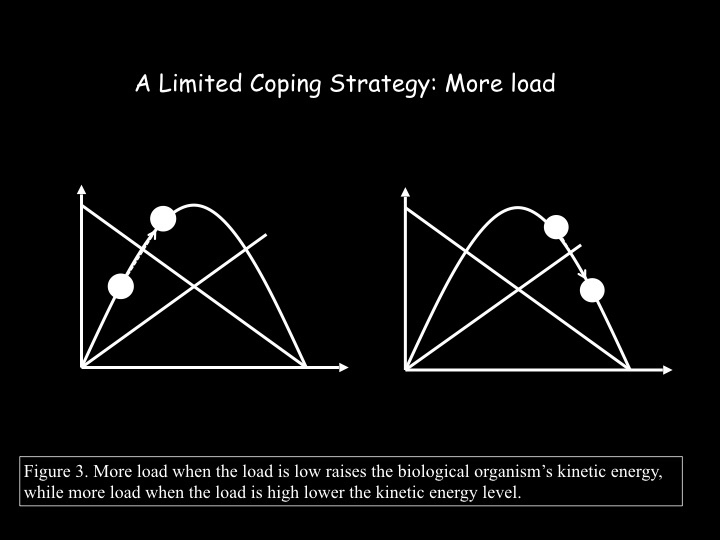
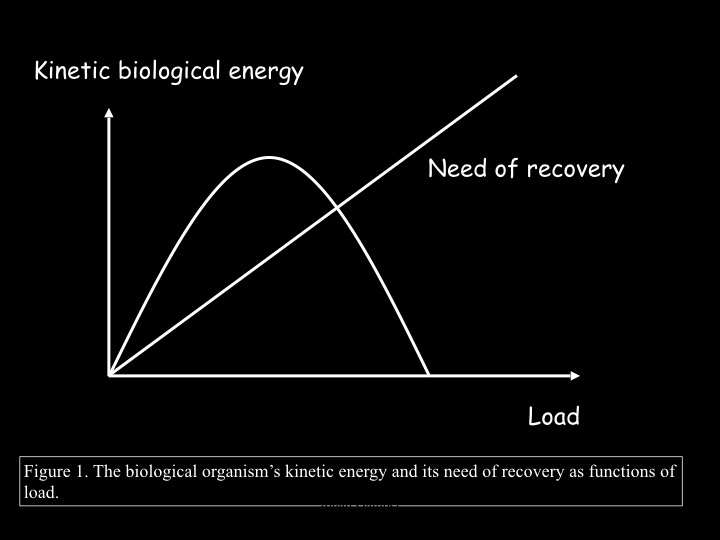
Macro psychology is built upon the notion of biological energy as suggested in Gamper (2020). Biological energy is construed as the organisms ability to recover from the load it is exposed to. That load entails a need of recovery that grows with the load. The available energy has a maximum and when that is reached as far as the ongoing recovery is concerned, the available amount of energy is decreased if the load continues to grow. This is illustrated in figure 1.

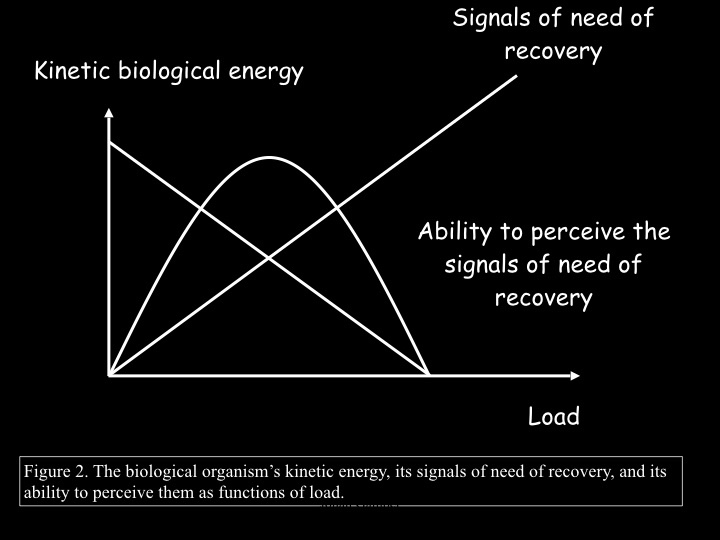
For experiencing subjects it is conjectured that the need of recovery on the one hand is mediated by signals thereof, and on the other hand that the subject has a lower ability to perceive those very signals, the stronger they are, as illustrated in figure 2.

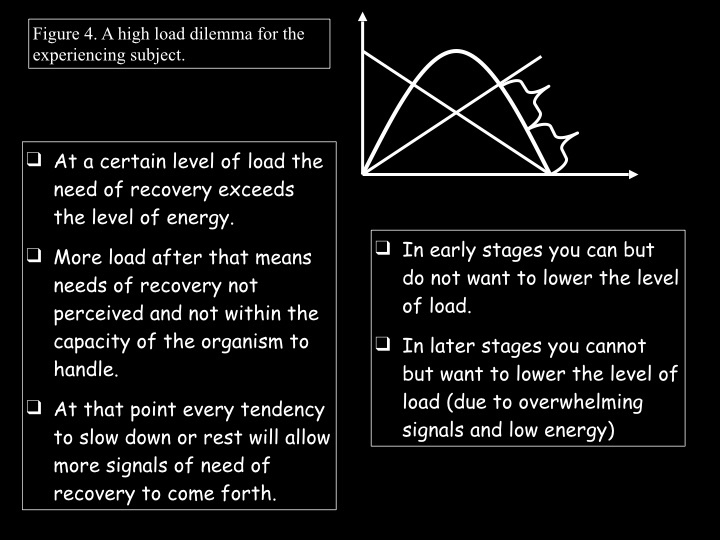
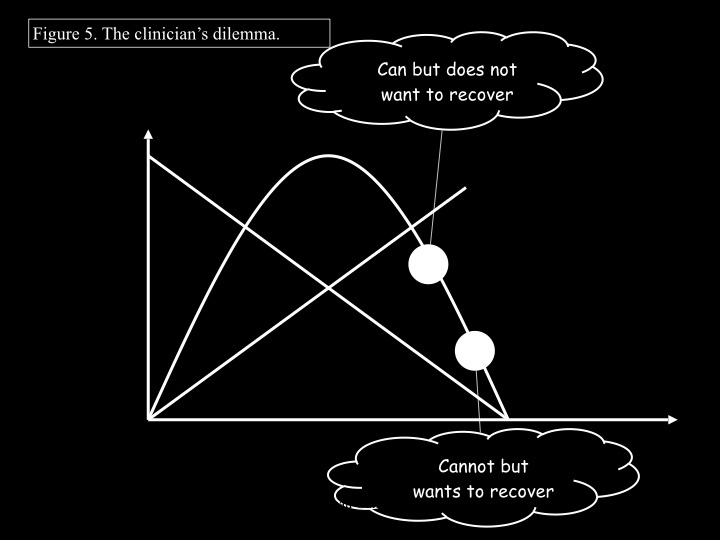
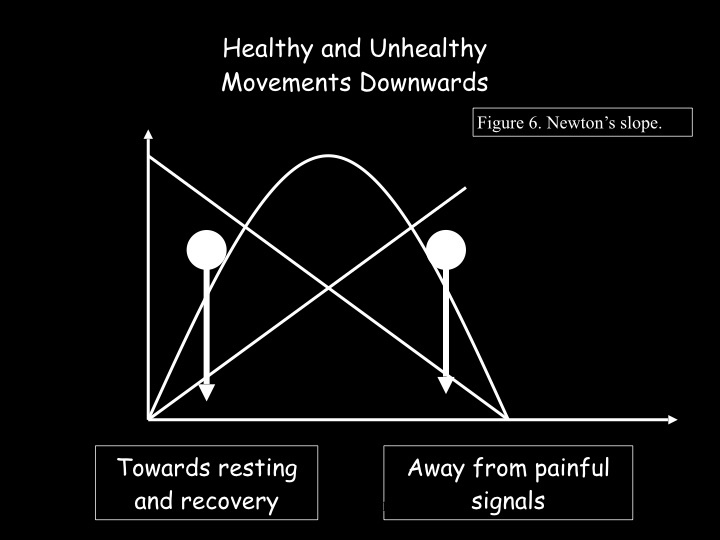
This dynamic for experiencing subjects has the odd consequence that even though the energy level lowers when load is increasing at high levels of load (compare figure 3) the subject tends to put pressure on herself to avoid the troublesome signals of need of recovery in order not to perceive them (compare figures 4-6).

3. The experiencing subject

The introduction of the experiencing subject allows for new possibilities for the organism to cope with load. We need to disentangle first, though, the biological object from the experiencing subject. For the biological object as such there is no dynamic to talk of. The object recovers if it needs to and can. When the organism is exposed to signals of need of recovery there is an experiencing subject that perceives them. Whereas the need of recovery is an abstract feature of organisms the signals of need of recovery are a reality for the experiencing subject. As depicted in figure 4 the signals can be attended to as they are perceived. This means that the biological needs of recovery are met via the experiencing subject. This, of course by assumption, is to say that the biological very needs of recovery are not perceived directly. The dynamic, however, is one dimensional — the organism recovers more or less.

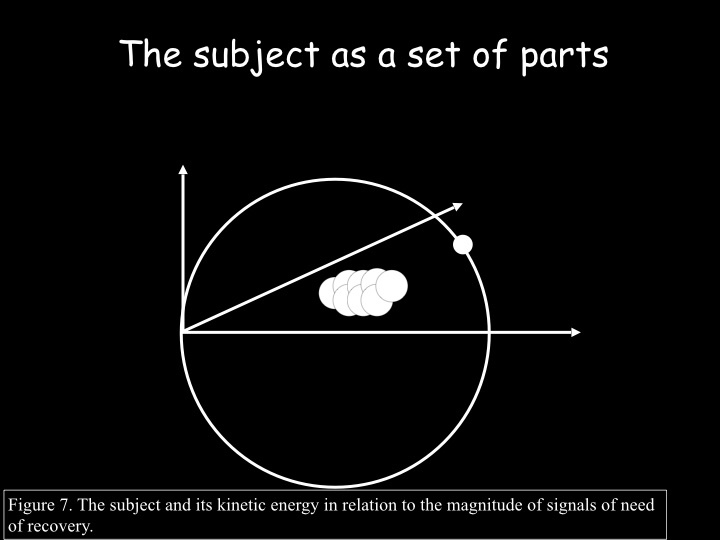
The experiencing subject, on its side, can cope with its signals in other ways. To look at those possibilities we first have to focus on the the very subject. For the biological object the need of recovery is an abstract feature. The subject on the other hand has real signals of need of recovery so it is something that has the experiences of the signals. This something, the subject, has its parts. We will assume that the subject is composed of some parts as illustrated in figure 7.

3.1. Repression

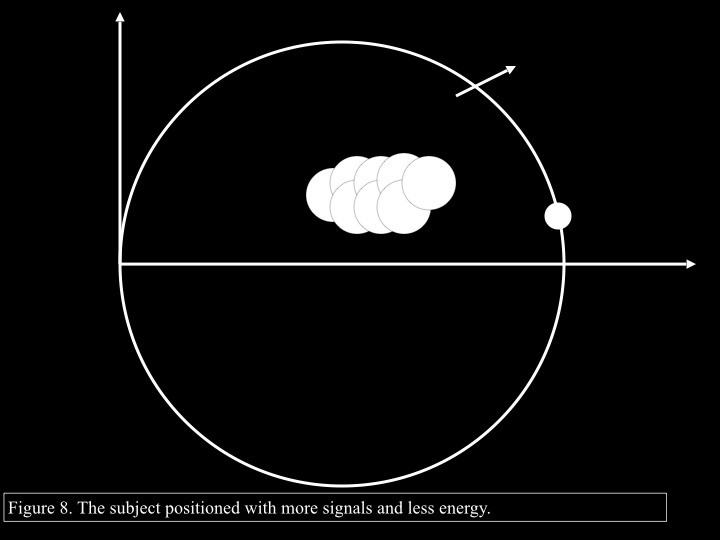
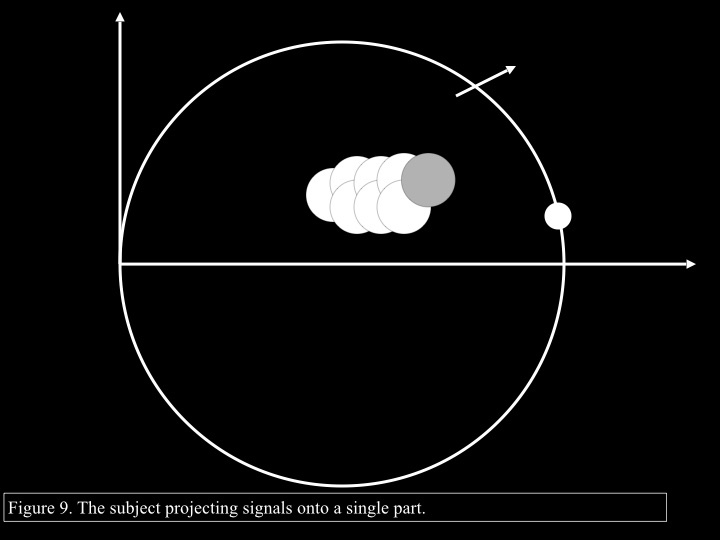
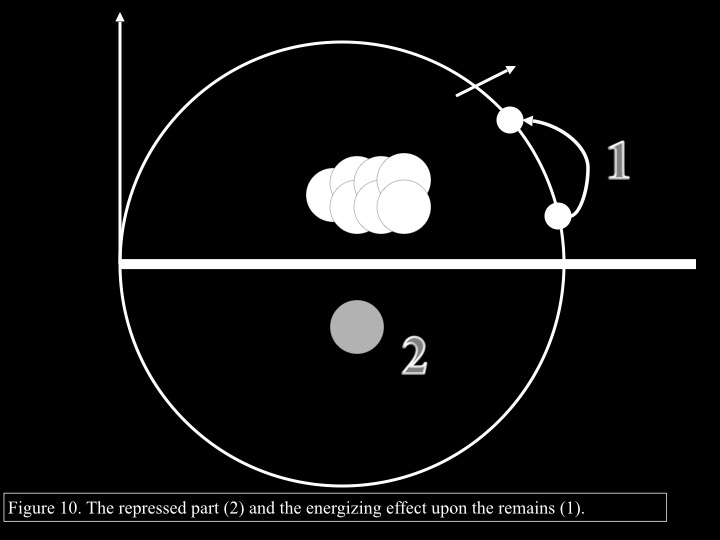
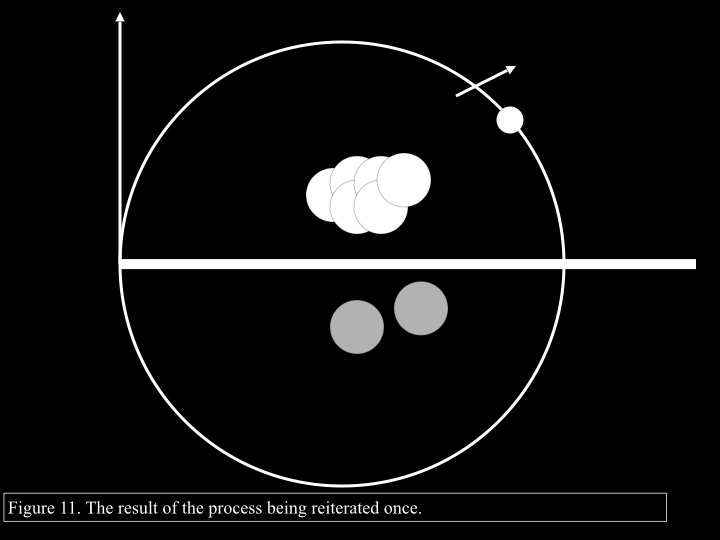
The disentangling now comes to work. Whereas the biological object has need of recovery as an abstract but absolute feature the experiencing subject has its signals of need of recovery as real but with degrees of freedom to engage with them. The suggestion here is that the subject can project troublesome signals onto a single part and then repress it. This leaves the repressed part emptied of energy while the remaining parts are energized. This process can be reiterated (compare figures 8-12).

4. Psychotherapeutic principles

The psychotherapeutic processes that are interesting are the reversed ones as compared to the ones previously mentioned. Those were concerned with avoiding difficult signals of need of recovery. Whereas conditioning concerned non subjective features of the biological organism behavioral therapy (BT), cognitive behavioral therapy (CBT), and psychodynamically oriented therapy (PDT) concerns processes related to the experiencing subject.

4.1 BT

The psychotherapeutic principle of BT in the context of macro psychology is that the therapist instructs the patient to take explicit recovery measures. The patient by following the instructions recovers and by doing so has to endure the previously withheld difficult signals of need of recovery. A typical example is behavioral activation for depression where the therapist may instruct the patient to take daily walks.

4.2 CBT

The psychotherapeutic principle of CBT in the context of macro psychology is that the therapist instructs the patient to take explicit recovery measures and explains why (according to some model). In the CBT variant of macro psychology the rational would be that the patient avoids recovery to avoid the signals of need of recovery. Therefore she should try to recover even though it hurts in order to gain energy. A typical example is to accept sick leave in cases of exhaustion.

4.3 PDT

The psychotherapeutic principle of PDT in the context of macro psychology is that the therapist tries to emphasize with the patient in order to identify aspects of the patient that she has repressed. If the patient can acknowledge repressed contents she is instructed to try to endure the associated difficult signals of need of recovery that comes with it in order to regain access to to her own repressed parts.

5. Applications

Scenarios with a maltreated dog, its owner, and a therapist.

Conditioning

The therapist takes the dog to a safe environment.

Behavioral therapy

The therapist instructs the owner to take regular long walks with the dog, to feed it regularly, to let it have access to fresh water and to stop hitting it.

Cognitive behavioral therapy

The therapist instructs the owner to take regular long walks with the dog, to feed it regularly, to let it have access to fresh water and to stop hitting it. The therapist also tells the owner why.

Psychodynamically oriented therapy

The therapist tries to help the owner to reconnect to repressed parts that cares for the dog.

6. Reference: Gamper J (2020) Biological energy and the experiencing subject. Axiomathes.

© 2022 Johan Gamper

Subrosa KB

Albatrossvägen 104, 13666, Vendelsö, Sweden

+46-73-239 63 64

karlpu.org

johan.gamper@karlpu.org.

Categories
Uncategorized

Accepted posters WPC 2026

The employer, SLSO, Region Stockholm, Sweden, doesn’t support this research. The research is affiliated to Johan Gamper’s philosophical hobby project “Adalja”. This may lead to withdrawal of the posters but please reach out if you are interested in the content.

103 MUST THE EXPERIENCING SUBJECT BE NON-BIOLOGICAL FOR COMPASSION TO BE AN INTEGRATED PART OF THE PSYCHIATRIC SETTING?

Johan Gamper
Region Stockholm, Brandbergens vårdcentral, Brandbergen, Sweden

AS56 – PHILOSOPHY AND HUMANITIES IN PSYCHIATRY – WHAT IS THE ROLE OF PHILOSOPHY IN PSYCHIATRY?

Abstract Submission

Objectives

In this submission I answer yes to the question posed in the title, building on Gamper, 2021). The possibility comes to a price though, an intricate redefinition of the notion of biological energy. An even higher price is the abandonment of the Aristotelian first philosophy.

Reference

Gamper, J. Biological Energy and the Experiencing Subject. Axiomathes 31, 497–506 (2021). https://doi.org/10.1007/s10516-020-09494-8


Methods

Deducation.


Results

It is shown that a biological object can have an experiencing subject. Since psychiatric condidtions per definition manifest themselves as part of subjective experiences clinicians must use their own subective exeperinces to use their compassion in the clinical setting.


Conclusions

The result is a turning point for psychiatry and psychiatrists now can use their experiences in their practise.


#111 FORMAL AND AXIOMATIC PSYCHIATRY

Johan Gamper
Region Stockholm, Brandbergens vårdcentral, Brandbergen, Sweden

AS56 – PHILOSOPHY AND HUMANITIES IN PSYCHIATRY – WHAT IS THE ROLE OF PHILOSOPHY IN PSYCHIATRY?

Abstract Submission

Objectives

I just want to lay on the table two related but unexplored fields For future research. The first comes from an attempt to axiomatize the natural laws (Gamper 2023a) and the other from an attempt to find formal relations between very different fields (Gamper (2023b).

References

Johan Gamper. (2023a). On the Axiomatisation of the Natural Laws — A Compilation of Human Mistakes Intended to Be Understood Only By Robots. Qeios. doi:10.32388/KC9YAU.

Johan Gamper. (2023b). Formal Theology. Qeios. doi:10.32388/EMANI


Methods

Formal and axiomatic deduction.


Results

The axiomatical attempt is very sketchy but it if successfull the result would pull psychiatry closer to formal scences.

The formal approach is very promising. Among other things it identifies a formal link between self-consciousness and black hole singularities.


Conclusions

This could be a start for psychiatry to be really integrated with the other sciences.


#131 MACRO PSYCHOLOGY AND THE FOUNDATION OF PSYCHOTHERAPY

Johan Gamper
Region Stockholm, Brandbergens vårdcentral, Brandbergen, Sweden

AS56 – PHILOSOPHY AND HUMANITIES IN PSYCHIATRY – WHAT IS THE ROLE OF PHILOSOPHY IN PSYCHIATRY?

Abstract Submission

Objectives

This work builds upon the paper Biological Energy and the Experiencing Subject (Gamper, J, Axiomathes, 2020). The focus is to show how the idea of an experiencing subject can be conceived of within modern psychotherapy. We follow the track from conditioning for animals (without concern for an experiencing subject), via behavioral therapy for humans with an experiencing subject and cognitive behavioral therapy for humans with an experiencing subject where we give the subject a rational for the behavioral modification, to psychodynamically oriented therapy where we confront the very subject without going via her behavior. The three methods are explained within the context of macro psychology. Conditioning concerns therapeutic methods that does not address subjective experiences of the patient and neither address subjective experiences methodologically. For instance, you do not give the patient instructions since you do not rely on the patients ability to understand them. Behavioral therapy concerns methods that that are mediated by instructions. The patient is told to follow a procedure. Cognitive behavioral therapy adds explanations to the behavioral therapy. Psychodynamically oriented therapy concerns thesubject’stendency to repress difficult inner material to feel better. This material is focused in the therapy and the patient is informed about how the therapist understands the dynamic. The framework, thus, that is presented, encompasses the major psychotherapeutic methods of today.


Methods

Deduction from clinical trial and error.


Results

An integrated view of modern psychotherapies.


Conclusions

Macro psychology can help bridge the gap between theoretical and clinical psychology.

#169 BIOLOGICAL PARTS AND BIOLOGICAL WHOLES — LESSONS FOR PSYCHIATRY

Johan Gamper
Region Stockholm, Brandbergens vårdcentral, Brandbergen, Sweden

AS56 – PHILOSOPHY AND HUMANITIES IN PSYCHIATRY – WHAT IS THE ROLE OF PHILOSOPHY IN PSYCHIATRY?

Abstract Submission

Objectives

Philosophically, it has been hard to determine how parts and wholes are related. Gamper (2024) suggests causal principles to solve the puzzle. For hundreds of years biology has discussed what the essential part of biological organisms is. Gamper (ibid.) makes a suggestion and uses it to compose living things, organisms. As biological objects this affects psychiatry too. Wee need to take into consideration the causal principles at hand and act accordingly. Psychiatrists don’t simulate flying. They fly.

Reference

Johan Gamper. (2024). Causal Principles in Material Constitution: A Philosophical Inquiry into the Composition of Objects. Qeios. doi:10.32388/H2B7NA.2. https://www.qeios.com/read/H2B7NA.2


Methods

We use a new mereological thesis to put psychiatry in perspective vis-a-vis other causal settings.


Results

Psychiatry, as having to do wih biological objects, is shown to be equally dealing with physical objects as other sciences.


Conclusions

This is a purely philosophical (mereological) study and may be used to inspire research into causal connections within psychiatry.